
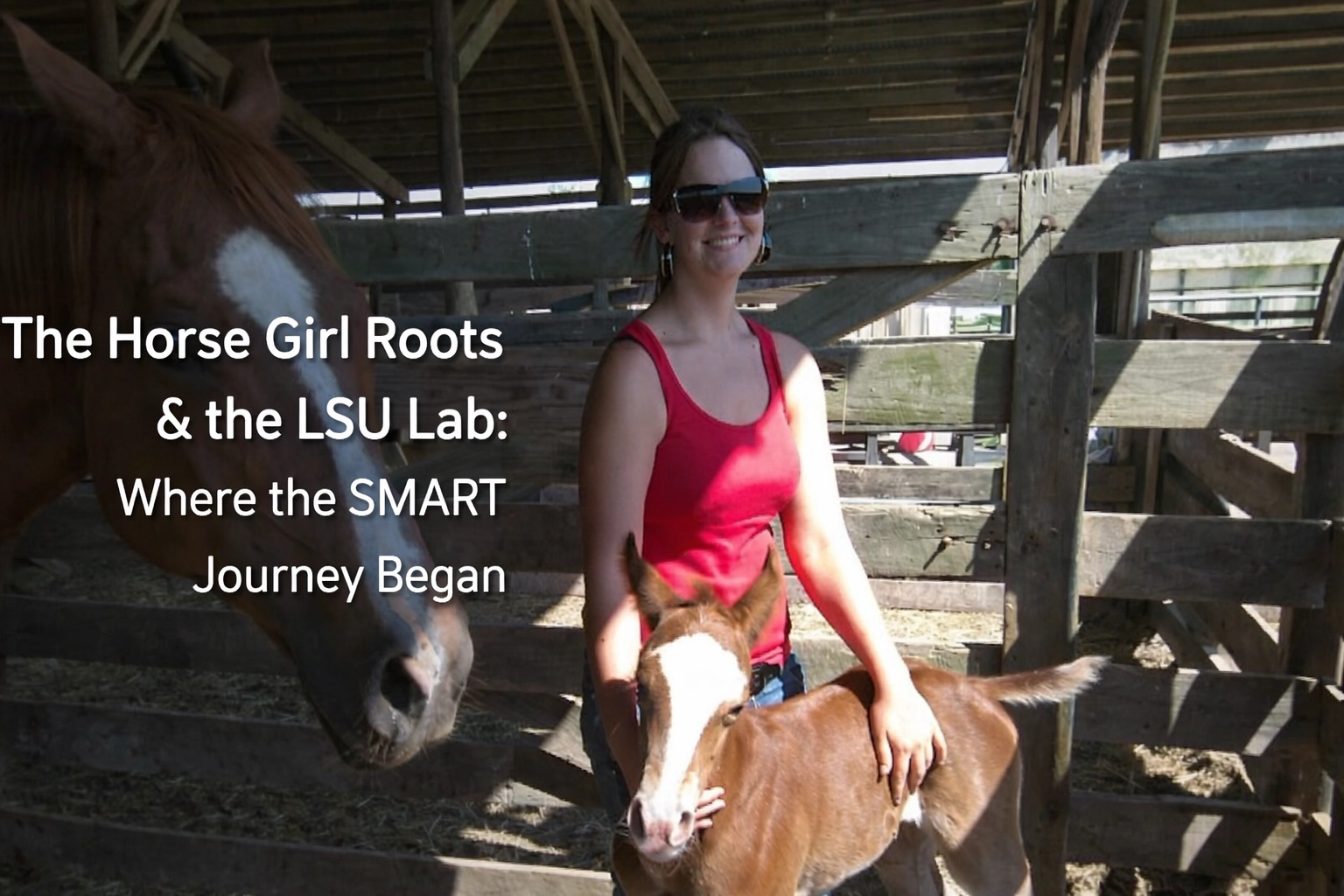
Image credit: SMART Reproduction
This is Part 2 of our "Arkansas Roots, Global Reach" blog series, based on Brittany Scott's interview on the Arkansas AgricultHER podcast hosted by Sherri Sanders and Jessica Wesson. Be sure to follow their podcast on Facebook and check out their Linktree for more inspiring stories from women in ag.
AgricultHER podcast — Episode 2 (YouTube)
Every Expert Started Somewhere

Before there were international sheep and goat genetics shipments—and long before SMART Reproduction became known for genetics export projects—there was a horse-crazy girl from East Texas who just wanted to be around animals. Long before the international genetics shipments, it all started here—at three years old on the family farm, where the passion for animals and agriculture first took root.
Brittany Scott's journey into the world of artificial insemination, semen collection, embryo transfer, and reproductive training didn't start in a high-tech lab. It started the way so many great agricultural careers do: with muddy boots, early mornings, and a passion that wouldn't quit.
By senior year of high school, that passion had turned into results. Showing her steer and winning Reserve Grand Champion at the San Augustine County Livestock Show was more than just a win—it was about learning the dedication it takes to succeed in the livestock industry.

The Horse Girl Who Became a First-Generation Graduate
If you've ever met someone who identifies as a "horse girl," you know exactly what that means. It's not just a hobby: it's a lifestyle. For Brittany, horses were everything. Growing up in East Texas, she spent every spare moment around them, learning their behavior, understanding their needs, and dreaming about a future where she could work with animals professionally.
But here's the thing about dreams: they don't come with instruction manuals. Brittany was a first-generation college student. There was no family roadmap for navigating higher education, no one to call when she didn't know what classes to take or which degree would actually lead to a career.
What she did have was grit. And a whole lot of determination.
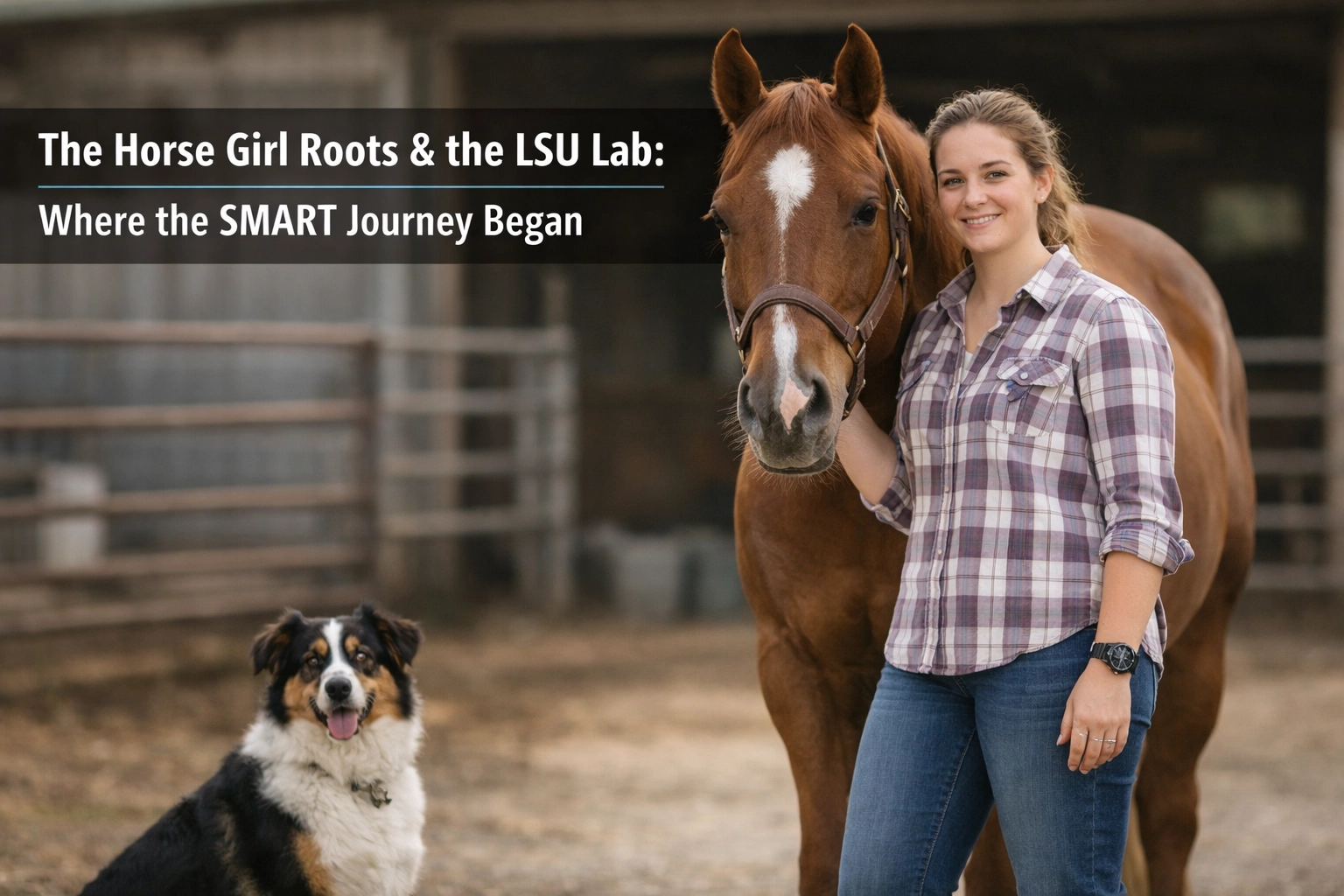 Brittany in graduate school at the LSU Reproductive Biology Center, where she managed the Equine herd. Pictured here with her horse, Thibideaux, and her dog, Boudreaux.
Managing the Equine herd at the LSU Reproductive Biology Center was a defining moment—blending her lifelong passion for horses with the rigorous science of reproduction.
She made her way to Louisiana State University (LSU), a school with a powerhouse reputation in animal science and agricultural research. It was there that her love for horses would intersect with the science of reproduction: and everything would change.
Inside the LSU Lab: Where Science Met Passion
At LSU, Brittany found herself working in the equine reproduction lab. This wasn't just feeding horses and mucking stalls (though there was plenty of that too). This was hands-on, cutting-edge reproductive technology: artificial insemination, semen evaluation, embryo collection, and embryo transfer procedures.

This hands-on research for her Master’s thesis was more than just academic; it was where she honed the technical precision required for ultrasounding and reproductive diagnostics.

It was a proud moment to give my grandfather a tour of the center; seeing his support meant everything as I navigated my way as a first-generation graduate.

Presenting my research at the International Embryo Technology Society annual meeting was a turning point. It wasn't just about the science; it was about realizing that this work had a global impact—a precursor to the international exports we handle today.
For a horse girl who wanted to turn her passion into a profession, it was like finding gold.
The skills she learned in that lab became the foundation for everything that followed. Working with equine genetics taught her:
- Precision handling of reproductive materials
- Laboratory protocols for semen collection and evaluation
- Embryo transfer techniques that would later translate to sheep and goats
- The importance of biosecurity and quality control
These weren't just academic exercises. They were real-world skills that would eventually help her build a business shipping elite genetics around the globe.
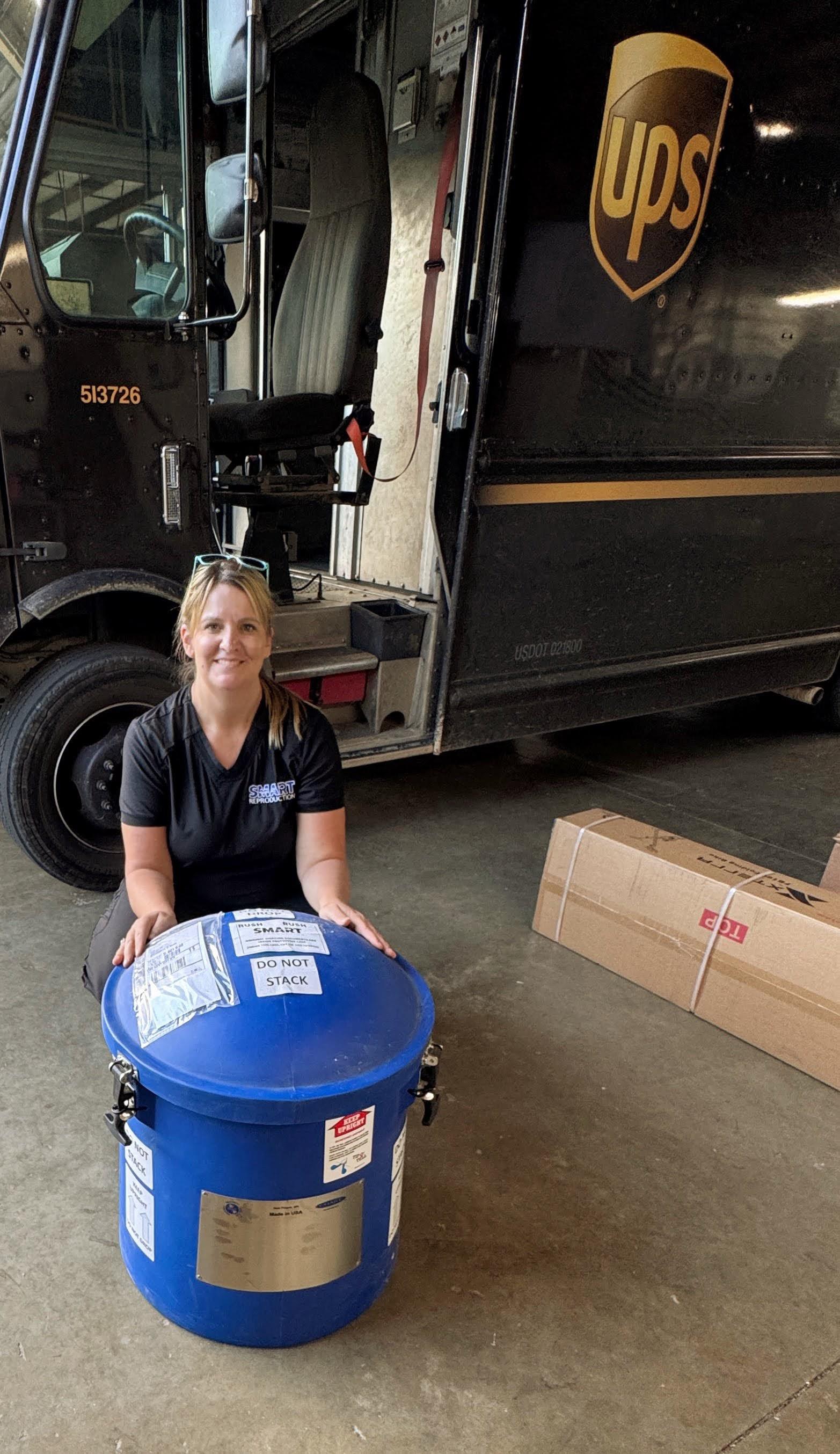 SMART Reproduction owner Brittany Scott preparing a shipment of caprine germplasm to Italy: the first-ever small ruminant genetics shipment from the USA to Italy. Image credit: SMART Reproduction
Why Horses? And Why Did She Switch to Small Ruminants?
Here's a question Brittany gets asked a lot: If you loved horses so much, why sheep, Boer goat, and dairy goat work?
The answer is surprisingly practical. The horse industry is wonderful, but it's also incredibly competitive and geographically concentrated. Breaking into equine reproduction as a career requires being in the right place at the right time: and often, being willing to relocate to Kentucky or Florida where the big breeding operations live.
Brittany's path took her to Arkansas instead. And in the Arkansas Delta, the opportunities weren't in horses. They were in cattle, sheep, and goats.
But here's what she discovered: the reproductive science is remarkably transferable. The principles of semen collection, evaluation, and storage? Same concepts, different species. Embryo flushing and transfer? Similar techniques, adjusted for anatomy. The training she received at LSU gave her a toolkit that worked across the board.
And small ruminants: sheep and goats specifically: turned out to be an underserved market with massive potential.
The Value of Being "Underestimated"
There's something powerful about being underestimated. As a first-generation college student, Brittany didn't have the connections or the pedigree that some of her peers had. As a woman in agriculture, she sometimes had to work twice as hard to be taken seriously.
But those challenges became advantages.
Being underestimated meant she had nothing to lose by trying something new. It meant she wasn't afraid to ask "dumb" questions or challenge the way things had always been done. It meant she was hungry in a way that people with easy paths sometimes aren't.
That hunger would eventually lead her to see opportunities others missed: like the fact that no one in the United States was properly set up to export sheep and goat genetics to the European Union and United Kingdom.
But we're getting ahead of ourselves. That story comes later in this series.
Building a Foundation for the Future
Looking back, Brittany's time at LSU wasn't just about learning technical skills. It was about building confidence. It was about proving to herself that a horse girl from East Texas could compete at the highest levels of agricultural science.
The lab work taught her discipline. The academic rigor taught her how to think critically. And the experience of being a first-generation student taught her resilience.
These are the same qualities she brings to SMART Reproduction today: and the same qualities she looks for when training the next generation of reproductive technicians.
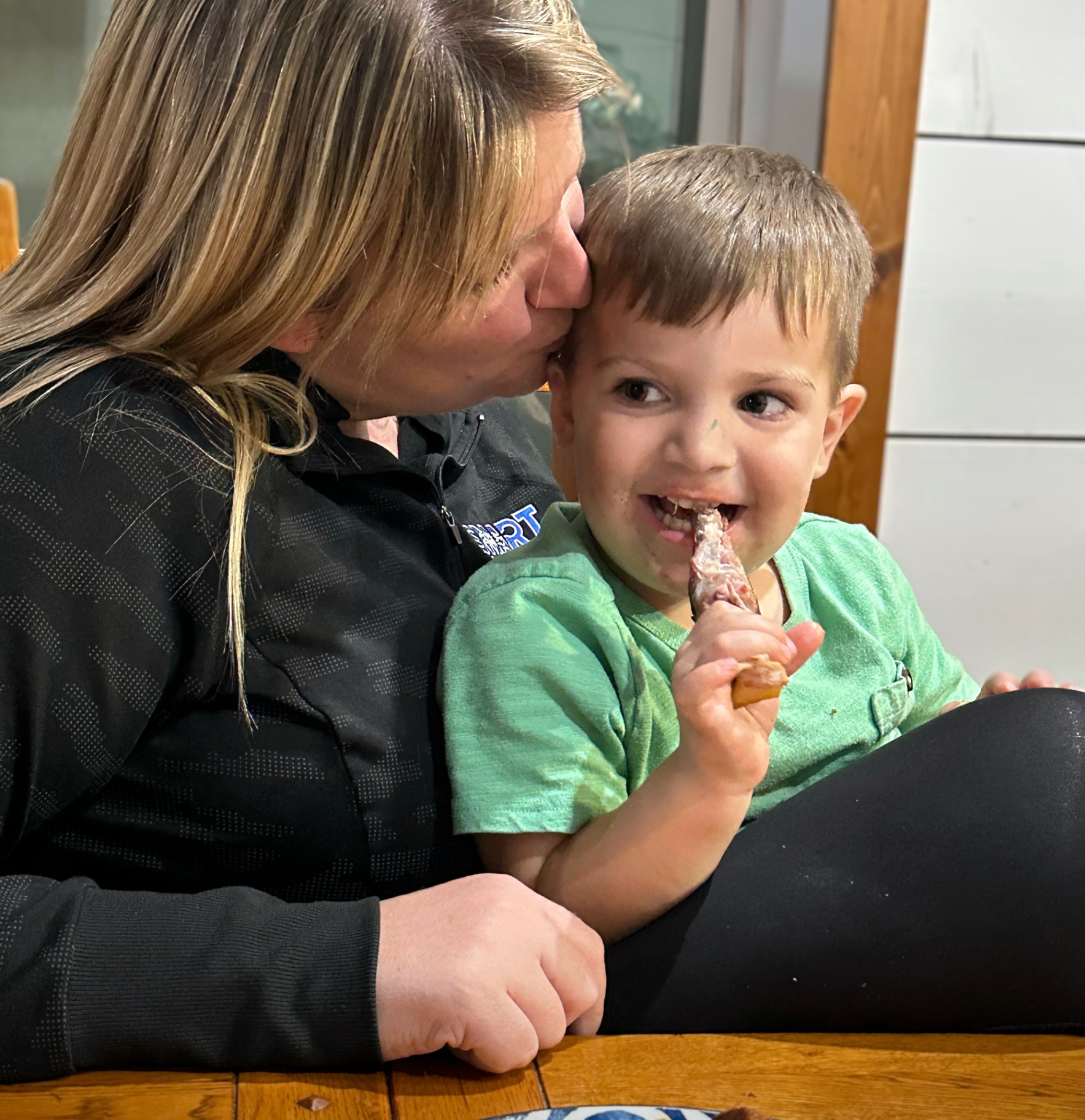 The connection between quality genetics and family tables starts with expert breeding programs. Image credit: SMART Reproduction
What This Means for Producers Today
So why does Brittany's backstory matter to you?
Because it proves that expertise doesn't require a fancy pedigree. It requires dedication, continuous learning, and a willingness to adapt—and it’s a reminder of what’s possible for women in ag who decide to build something different (which is exactly why stories like this resonate on AgricultHER).
Whether you're a producer looking to improve your sheep or goat genetics, or you're considering a career in livestock reproduction, Brittany's journey offers a few key lessons:
- Start where you are. You don't need perfect circumstances to begin.
- Skills transfer. What you learn in one area often applies to another.
- Underserved markets are opportunities. Sometimes the biggest wins come from going where others aren't.
- Never stop learning. The training never really ends.
Credit Where It’s Due: Sherri Sanders & UAEX White County
A quick shoutout to Sherri Sanders for representing the White County University of Arkansas Cooperative Extension Service and for the work they do every day to support producers, families, and communities across the county. If you’re in Arkansas (or just like seeing practical, research-backed resources in action), it’s worth bookmarking their main page and taking a look around: UAEX White County.
And if you came here because of Brittany’s interview, you can find the AgricultHER podcast page hosted on the UAEX site here: AgricultHER podcast (UAEX White County). Go give it a visit and explore more of what they’re building for women in agriculture.
Ready to Start Your Own Journey?
If Brittany's story inspires you to take the next step in your livestock genetics journey, SMART Reproduction is here to help.
Explore our catalog of elite sheep and goat genetics: SMART Reproduction Catalog
Interested in international exports? Request a custom estimate: International Estimate Request
Want to partner with us? We're always looking for like-minded producers and organizations: Partner Application Form
And if you want to learn more about reproductive techniques and training opportunities, check out our Reproduction Training Services.
Ready to Explore Genetics or Collaborate?
- Explore the online genetics catalog: https://smartrepro.com/catalog/
- Interested in a strategic collaboration? Apply here: https://smartrepro.com/partners-application-form/
- International clients: International Client Interest Form: https://forms.monday.com/forms/7151fcf9ab457839f025e2a6ecb129fd?r=use1
- USA (Domestic) clients: USA (Domestic) Interest Form: https://forms.monday.com/forms/0476010f947d9bea6ba26da126109709?r=use1
Whether you’re shopping for your next genetics upgrade or looking for a trusted partner for an export or reproduction project, we’d love to connect.
Coming Up Next
In Post 3 of our "Arkansas Roots, Global Reach" series, we'll follow Brittany from LSU to the Arkansas Delta: where she worked with the extension service and eventually made the leap into entrepreneurship. It's a story about taking risks, following your grandfather's example, and betting on yourself.
Don't miss it.
This blog series is based on Brittany Scott's appearance on the Arkansas AgricultHER podcast. Huge thanks to hosts Sherri Sanders and Jessica Wesson for sharing these incredible stories of women in ag. Follow them on Facebook and find all their content at their Linktree.