
This post is part of the AgricultHER podcast series with Sherri Sanders from the White County University of Arkansas Cooperative Extension Service. Tune in to Episode 4 to hear more about scaling SMART Reproduction and breaking into global markets.
The Business on Wheels
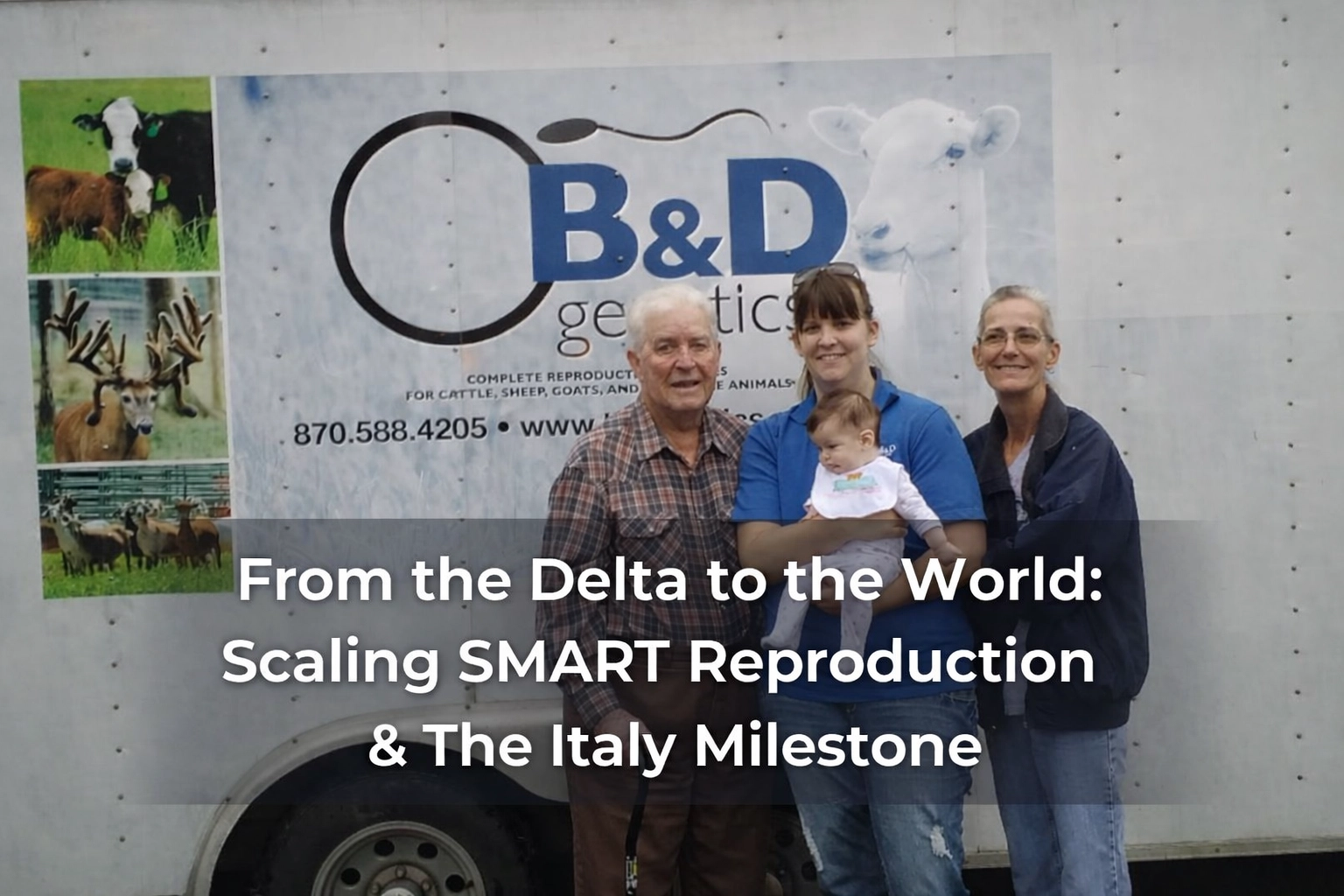
When people ask me how SMART Reproduction got its start, I usually just point to a picture. That's me, my daughter Kendall, my mom, and my grandfather DL Wall standing in front of our first mobile reproductive laboratory, a trailer that would become the foundation of everything we do today.
It wasn't fancy. It was a veterinary unit on wheels, packed with the essentials for artificial insemination and embryo transfer work. But it was ours, and more importantly, it was mobile. That meant we could go to the animals instead of making producers haul livestock across state lines just for breeding services.
The mobile lab era taught me something critical: logistics matter as much as science. You can have the best genetics in the world, but if you can't get them where they need to go, you're dead in the water. That lesson would come back around in a big way when we started thinking about exports.
Why We Parked the Trailer (and Built a Permanent Clinic)
Here’s the part people don’t always see on social media: the mobile-lab life is awesome… until it isn’t.
When I started having kids, being on the road constantly got complicated fast. We even had my grandmother tag along to help (because if you’ve ever tried to be a mom and run a reproductive schedule, you know it’s basically a team sport). But even with extra hands, living out of a trailer and chasing breeding windows across multiple states isn’t exactly built for bedtime routines and family dinners.
So I had to get honest about the long game. To balance being a wife, a mom, and a reproductive specialist, I needed a model where elite breeders could come to us—and we could control the environment, the schedule, and the biosecurity.
That’s what led to the solution: we created the first multi-country USDA certified small ruminant collection and export center in the USA, located right on our farm in Arkansas. Instead of “Where are we headed this week?” the question became “How do we build a facility that can serve the whole world—without living on the interstate?”
And that shift changed everything.
Scaling Beyond the Farm Gate
In those early years, we were mostly local. Arkansas producers. Regional Boer goat and sheep breeders who needed help improving their herds. We'd show up, do the work, and head to the next farm. It was honest work, and it paid the bills, but I knew we were sitting on something bigger.
The genetics we were working with, elite American dairy goat and meat goat lines, were in demand globally. I'd get emails from breeders in South America asking if we could ship. Calls from Europe wanting to know how to access U.S. genetics. The demand was there. The infrastructure? Not so much.
That's when the lightbulb went off. If we could figure out the regulatory maze, the quarantine requirements, and the shipping logistics, we could be the bridge between American producers and international markets. We could take women in ag entrepreneurship to a whole new level.
The Nightmare That Became a System
Let me be real with you: international livestock genetics exports are a nightmare.
Every country has its own set of rules. Italy wants this health certificate. Thailand needs that import permit. Brazil has quarantine protocols that make your head spin. And don't even get me started on the timing, one missed deadline and you're starting the whole process over from scratch.
But here's the thing about nightmares: once you figure out how to navigate them, they become your competitive advantage. Because most people? They look at that regulatory wall and say, "No thanks." We looked at it and said, "Challenge accepted."
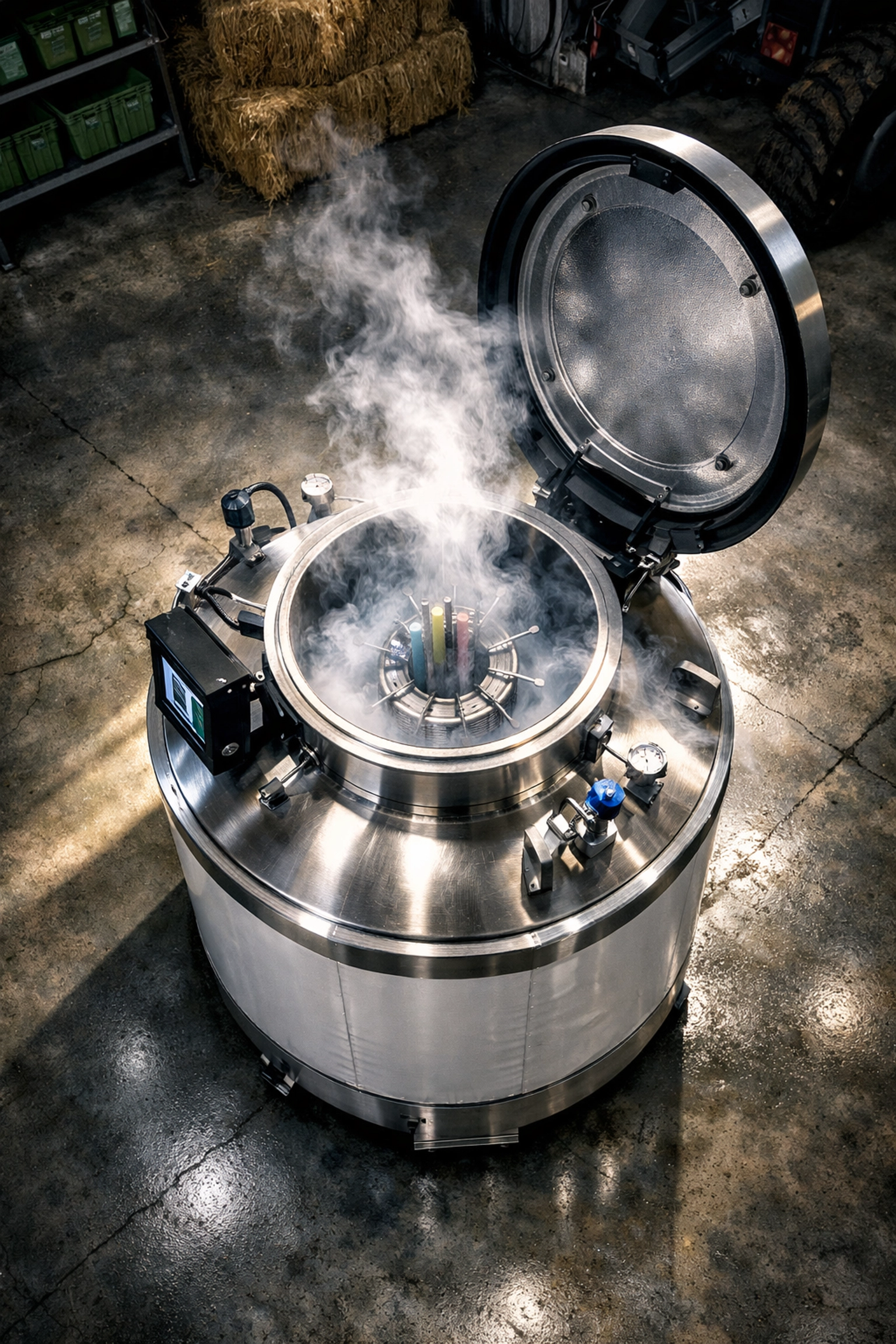
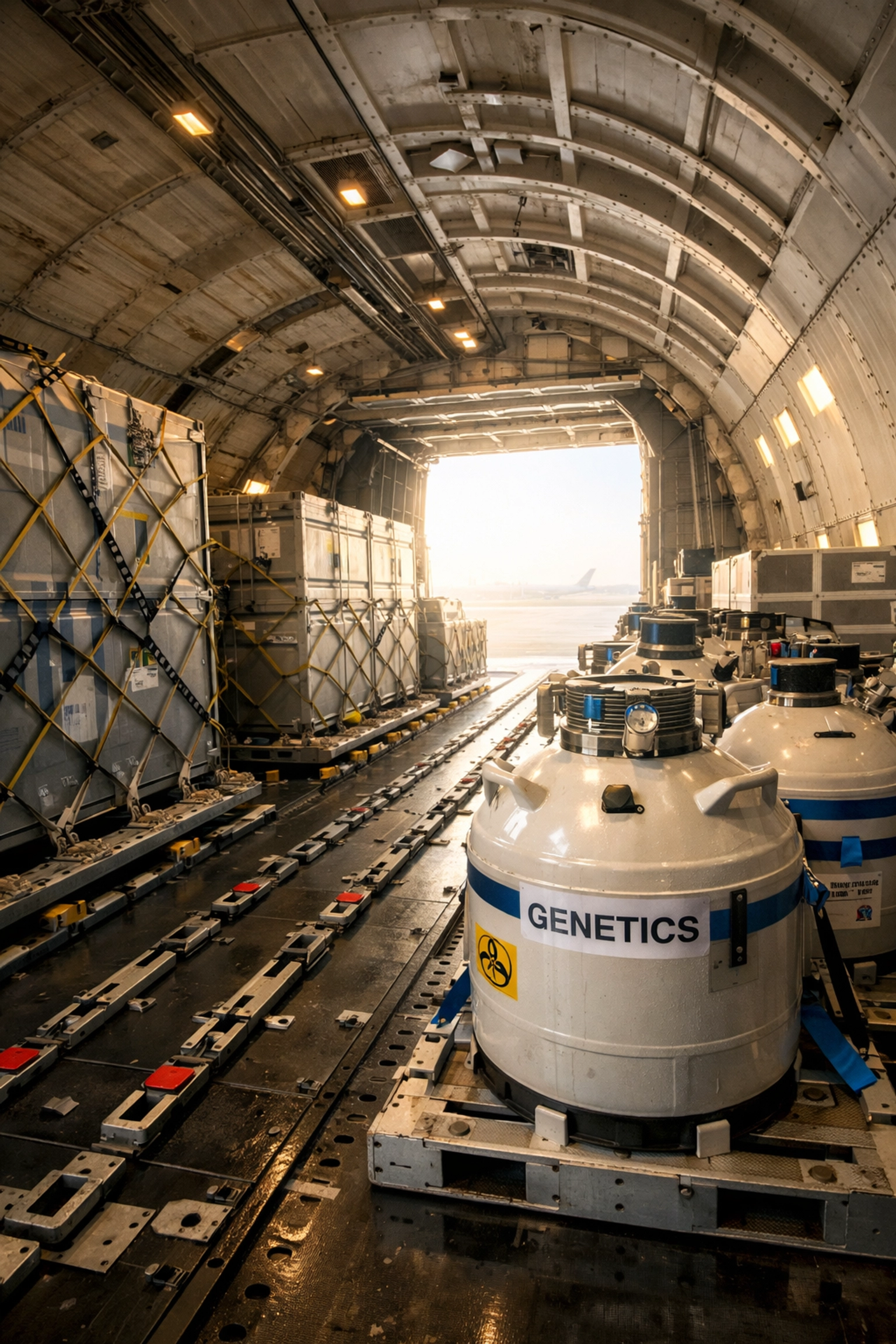
We built relationships with USDA officials. We learned the paperwork inside and out. We figured out cold chain logistics for shipping frozen semen in liquid nitrogen tanks across oceans. And slowly, farm by farm, shipment by shipment, we turned chaos into a system.
September 2025: The Italy Milestone
If there's one moment that defines SMART Reproduction's leap from regional service provider to global player, it's September 2025.
That's when we completed the first-ever U.S. small ruminant germplasm shipment to Italy. The first American goat semen export to Italy. Ever.
I still remember that “wait… we’re actually doing this” feeling when we completed the first-ever U.S. small ruminant germplasm shipment to Italy. The first American goat semen export to Italy. Ever.
But if you want the real picture of what building SMART Reproduction looked like, it’s not a glam shot with a shipping tank—it’s this:

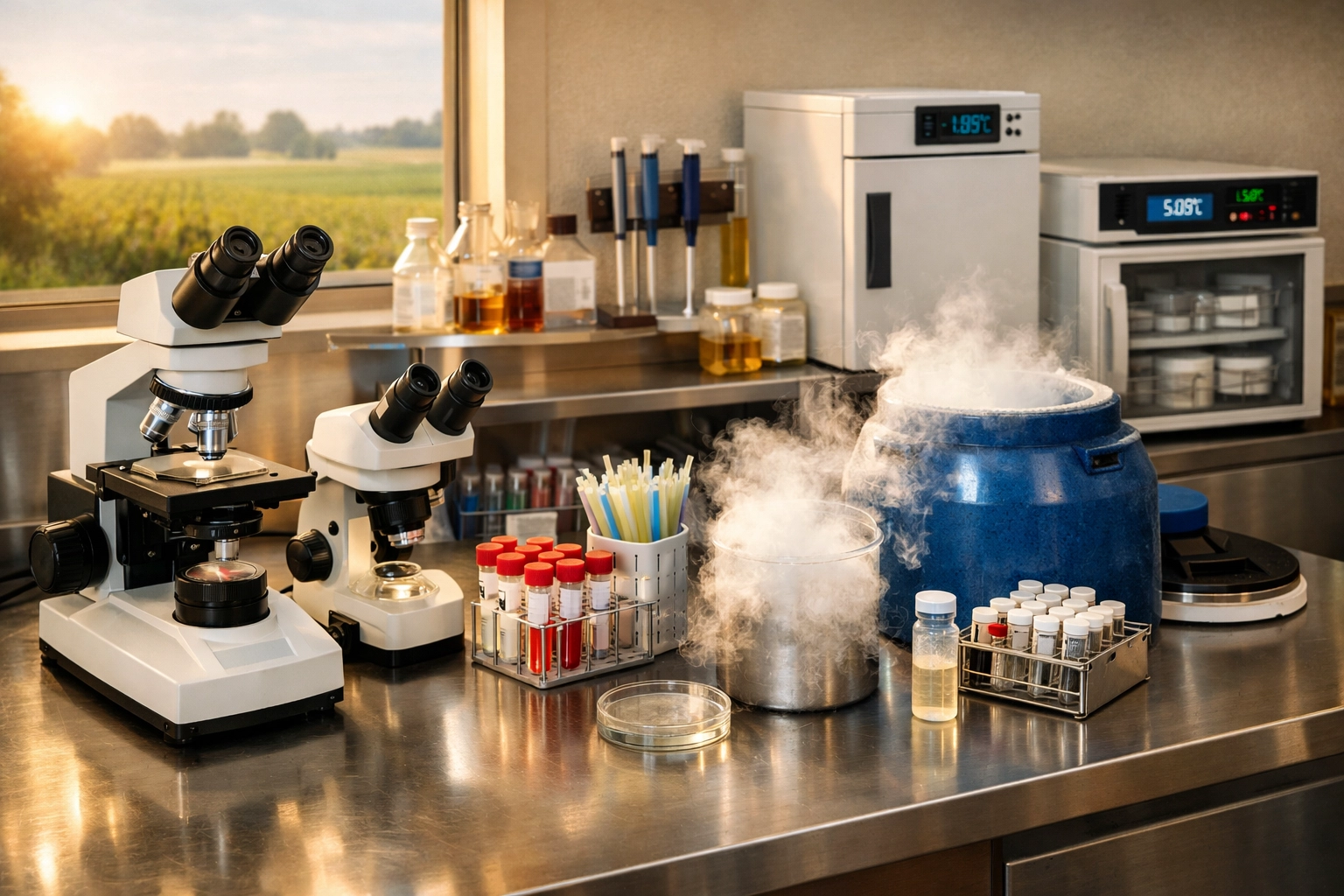
Mom-preneur reality check: one eye on the microscope, one ear on the baby. This is exactly why we pivoted from the road to our Arkansas clinic—so I could be a mom and a world-class reproductive specialist without living out of a trailer.
The Italy milestone opened doors. Suddenly, we weren't just the "mobile lab people" anymore. We were the company that could actually deliver international genetics with all the regulatory compliance and technical support baked in. That credibility matters when you're trying to scale.
Beyond Italy: Building Global Reach
Italy was the headline, but it wasn't the only market we were cracking.
In February 2025, we participated in the USDA's Agricultural Trade Mission to Bangkok, Thailand. The goal? Expand U.S. agricultural exports and strengthen trade relationships in Southeast Asia. For us, it meant connecting with breeders and government officials who were hungry for American genetics to improve their domestic livestock industries.
We also established operations in Latin America, including collaboration with the Brazilian Goat Breeders Association. Brazil has a massive small ruminant industry, and they were looking for ways to strengthen their genetics programs. We brought the science, the logistics, and the training to help them level up.
Every new market taught us something. Thailand showed us the importance of cultural partnerships. Brazil reinforced the value of boots-on-the-ground technical support. Italy proved that even the most established agricultural markets need access to American innovation.
The Digital Shift
Here's where things get interesting. As we scaled, I realized we couldn't keep doing everything manually. The export business was growing faster than we could handle with spreadsheets and phone calls.
That's when we started building the digital catalogue, a searchable, filterable platform where international clients could browse elite American genetics, see exactly what's available, and initiate the export process with a few clicks. Think of it as the "Amazon of livestock genetics," but with way more regulatory complexity behind the scenes.
The platform is still evolving, but it's already changing the game. Breeders in Africa can browse our online catalog at 2 AM their time and flag genetics they want. We handle the rest, sourcing, collection, quarantine, paperwork, shipping, and technical support on delivery.
It's the combination of high-tech and high-touch that makes us different. The digital tools handle scale. The human expertise handles quality.
What This Means for American Producers
Here's the cool part: every international shipment we make creates opportunity for American breeders.
When we ship Boer goat genetics to Italy or dairy goat semen to Thailand, that demand flows back to U.S. farms. We're actively sourcing elite animals from producers across the country, giving them a global market for genetics that might otherwise stay local.
It's a win-win. International breeders get access to world-class American genetics. U.S. producers get premium prices for their elite animals. And we get to be the bridge that makes it all happen.
Lessons from the Road (and the Runway)
Scaling from a mobile lab to a global export operation taught me a few things:
1. Infrastructure is everything. You can have the best product in the world, but if you can't deliver it reliably, you don't have a business.
2. Relationships matter more than paperwork. Yes, you need the permits and certificates. But the real game-changer is having trusted partners in every market who understand your mission.
3. Women in ag can build at scale. The livestock industry isn't exactly known for its gender diversity, especially at the export level. Proving that a woman-led company can execute complex international logistics? That's not just good business: it's a statement.
4. Your grandfather was right. DL Wall always said, "If you're going to do something, do it right." That mobile lab in the photo? That was us doing it right from day one. Everything since has been an extension of that same philosophy.
Tune Into Episode 4
Want to hear more about the Italy shipment, the chaos of international logistics, and what it's really like to build a global agtech business from the Arkansas Delta? Check out Episode 4 of the AgricultHER podcast with Sherri Sanders from the White County University of Arkansas Cooperative Extension Service.
Sherri has been an incredible supporter of our work and a champion for women in agriculture across Arkansas. The Extension Service does amazing work connecting producers with resources, education, and opportunities. If you're in Arkansas (or just curious about what great extension work looks like), visit the AgricultHER podcast page to learn more.
The Takeaway
SMART Reproduction didn't start as a global export company. We started as a mobile lab serving local producers. But by solving one problem at a time: better genetics, better logistics, better access: we built something that connects breeders, genetics, and markets across continents.
The Italy milestone wasn't the finish line. It was proof of concept. Now we're scaling into Pacific Asia, expanding in Africa, and deepening our Latin American partnerships. The mobile lab era taught us how to move. The export era is teaching us how to fly.
Ready to Access Elite U.S. Genetics?
Whether you're a domestic producer looking to improve your herd or an international client interested in importing American genetics, we've got you covered.
Browse our elite genetics: Check out our full online catalog to see what's available for immediate shipment.
Explore strategic partnerships: Interested in distribution, technical collaboration, or joint ventures? Fill out our partnership interest form.
International clients: Ready to import U.S. sheep or goat genetics? Submit our International Client Interest Form and let's start the conversation.
USA (Domestic) producers: Looking for reproductive services or genetics sourcing? Fill out our USA Interest Form and let's talk about your herd goals.
From the Delta to the world( let's build something together.) 🐐🌍✨